
The Mistake Most People Make First
The instant a garage door reverses or refuses to close, most homeowners grab a rag, wipe the little sensor lenses near the bottom of the track, and call it fixed. It's tempting because it's free, takes ten seconds, and everyone's heard that "dirty sensors" cause this. Sometimes it even works, which makes the habit stick. But when the door does the same thing the next day, people keep wiping the same lenses and mashing the remote button, assuming persistence will fix a problem that persistence can't touch. Meanwhile the actual cause, a worn roller, a slipping cable, or a spring that's lost tension, keeps getting worse while nobody looks at it.
What the Symptoms Usually Look Like
- Starts closing, stops, reverses to open: the opener's safety system thinks something is blocking the door.
- Won't close at all, opener lights blink: usually a sensor alignment or wiring fault, not a mechanical jam.
- Closes partway, then just stops: often a limit setting or an obstruction rather than a safety reversal.
- Reverses at the exact same spot every time: points to something physical in the track at that location, not the sensors.
- Works fine in the morning, fails by afternoon: heat and humidity swelling, or sun glare hitting the sensors, are common suspects.
Causes, in the Order a Technician Checks Them
1. Safety Sensors (Photo Eyes)
These two small sensors sit a few inches off the floor on either side of the track and have to be aimed at each other exactly. If one is bumped, nudged by a lawn mower or a bike, or just slightly out of level, the opener assumes something is blocking the beam and reverses the door as a safety measure. A technician checks for a solid, non-blinking indicator light on each sensor, looks for spiderwebs or sand blown in during a storm, and re-aims the brackets with a level. Afternoon sun angling straight into a sensor lens during certain times of year can also cause false reversals, which is why this gets ruled out early even though it's rarely the whole story.
2. Debris or Obstructions in the Track
After a hard afternoon downpour, it's common to find leaves, sand, or small branches washed into the bottom track or sitting right in the sensor beam. This is checked visually along the full track length, not just near the sensors, since a bent section or built-up debris anywhere in the path can trigger a reversal.
3. Track Alignment
Wood garage door frames swell with humidity and shrink again as they dry out, and that seasonal movement can nudge a track slightly out of alignment over time. A technician checks the gap between rollers and track with a square or straightedge, looking for pinch points or spots where the door binds rather than gliding.
4. Opener Force and Limit Settings
Every opener has a force setting that tells it how much resistance is "normal" before it assumes an obstruction and reverses. If this is set too sensitive, or if it was never adjusted after a spring was replaced or a door was repainted and got heavier, the opener will reverse on perfectly healthy doors. This is adjusted with a small dial or screwdriver on the opener unit itself, and is often the fix when sensors and track check out clean.
5. Rollers and Hinges
Salt-laden air moving inland from the coast accelerates rust on steel rollers and hinge pins, and rusted rollers drag and bind instead of rolling smoothly. That added resistance can be enough to trip the opener's force sensor even with perfect sensor alignment. A technician checks each roller for pitting, flat spots, or seized bearings, and for hinges that have started to bend.
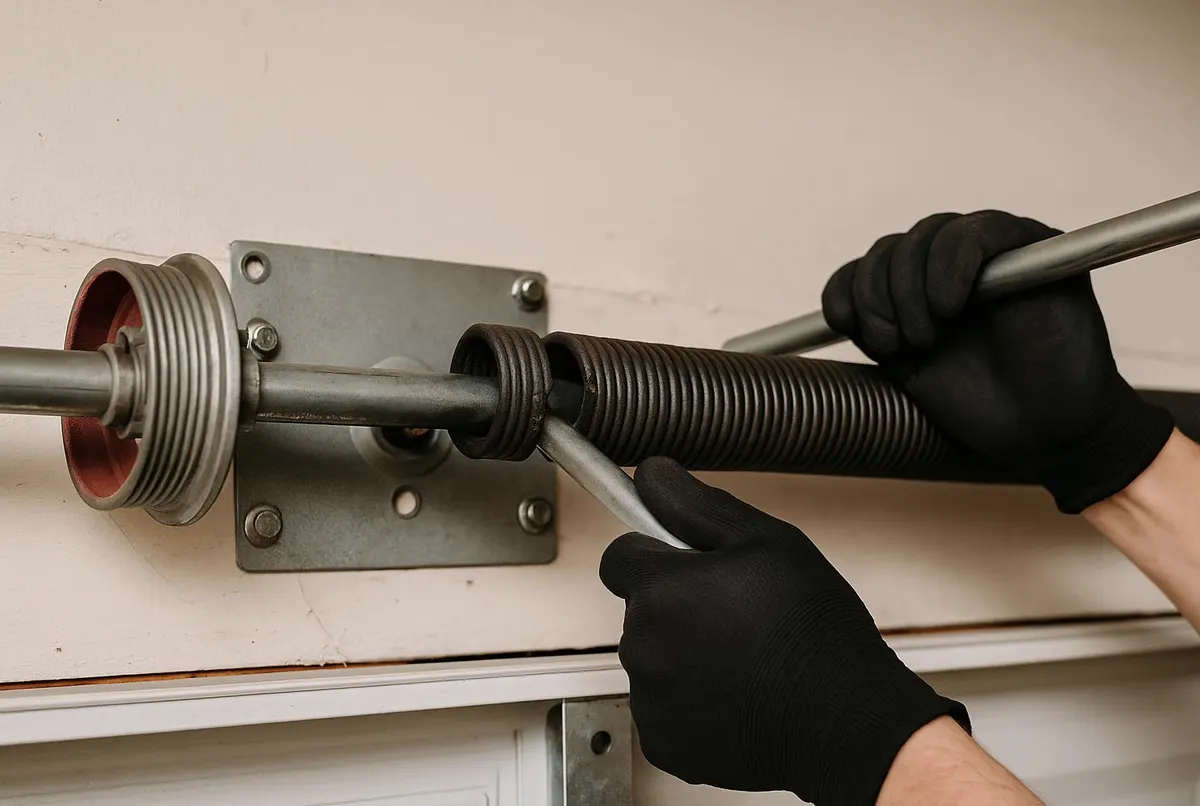
6. Cables and Springs
This gets checked after the simpler items because it involves stored tension and real risk if handled wrong. A garage door is balanced by its springs, and when a spring loses tension, from age, from repeated temperature swings common in Florida's hot days and cooler nights, or from corrosion, one side of the door gets heavier than the other. The opener senses that uneven resistance and reverses, or simply can't pull the door down at all. Checking this means watching how the door moves when disconnected from the opener and manually lifted partway, something that should only be done by someone who knows how to control the spring tension safely.
7. Opener Motor and Drive Gear
If everything mechanical checks out, the last stop is the opener itself, a worn drive gear, a failing capacitor, or circuit board damage from moisture intrusion during heavy storms. This usually shows up as grinding noises, a motor that runs but the door doesn't move, or inconsistent behavior that has nothing to do with the door's position.
When to Call Lawtey Garage Door Service
If you've wiped the sensors, cleared the track, and the door still reverses or refuses to close, it's time to stop guessing. A spring that's lost tension or a cable that's starting to fray is not a DIY repair, the stored force involved can cause serious injury, and guessing at opener force settings without understanding the mechanical cause just delays the real fix. We handle everything from Garage Door Spring Repair to Off Track Door Repair, and we'll walk the full track, check the sensors, test the balance, and tell you exactly what's wrong before we touch anything.
If your garage door in Lawtey, Starke, or anywhere in Bradford County is reversing, stalling, or refusing to close, call Lawtey Garage Door Service today and we'll get it diagnosed and running right.